By Ewan Jackson
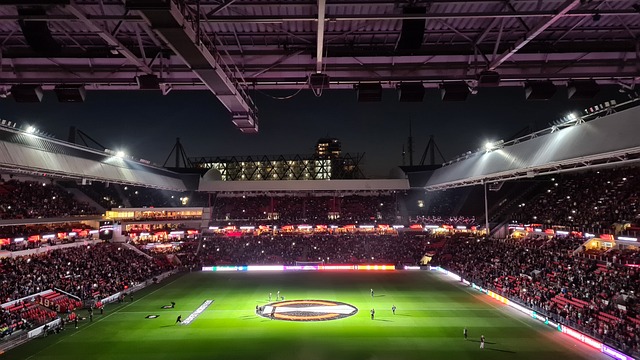
The 2023/24 Eredivisie season saw the resurgence of one of Dutch football’s powerhouses reclaim their spot as champions of Holland. PSV’s first league title in 5 years capped off a hugely successful season for Boeren in which huge strides were made by the club on and off the pitch. Peter Bosz’s men amassed 91 points, losing just one game in the league, as well as narrowly losing out over two legs to eventual Champions League finalists Borussia Dortmund in Europe. This is a look at how they did it and why the future looks incredibly bright for the team from Eindhoven.
Like so many other clubs in Holland, there is a direct pipeline from academy to first team football. The utility of home-grown talent is embedded in the DNA of the football club, and it is responsible for the emergence of so many footballing superstars. Brazilian Ronaldo, Gullit, Robben and so many other household names have plied their trade in the Philips Stadion with the Dutch outfit continuing to nurture and evolve young talent throughout its history. This has not only made PSV a consistent force on the pitch, but it has also allowed financial sustainability off it. The recent sales of Cody Gakpo, Noni Madueke and Donyell Malen generated over 100 million euros in transfer fee income. The astute reinvestment into the club from these sales has allowed Boeren to replace their star individuals season after season and to continue to be competitive during this time.
PSV’s number 9 Luuk De Jong finished the league season with a staggering 29 goals in 34 games. The decision to re-sign the striker in 2022 is one of a multitude of key decisions in the transfer market that has transformed PSV into a force domestically and in Europe. The aspect in which PSV’s blueprint for success differs to many other clubs is its focus on intertwining academy products and foreign investment. Contrastingly to other Dutch teams, the Eindhoven outfit continue to spend money on players that have already established themselves in the game. With the big-money addition of Jerdy Schouten from Bologna as well as the re-signing of Mexican international Hirving Lozano, there is no reluctance from the club’s hierarchy to spend money. It is this fearlessness in the transfer market that makes the Dutch side so unique and admirable. The blend of both home-grown talent and investment abroad allows academy talents to evolve alongside the experience that has been brought in, a risk and reward policy that relies on smart recruitment, culminating in an incredibly successful season.
The Dutch champions’ framework for success shows that big money investment must not only be to recruit new footballing superstars, but it must be to help the ones that are already at the club. There is no doubt that PSV’s ability to outspend their rivals positions them with a greater chance of success. However, this investment is primarily to allow academy talent to flourish. This is exemplified by current first-team players Johan Bakayoko and Jordan Teze, who can be argued to be next in line for big money moves away. The positive impact of the likes of Schouten and Lozano, who have already played in one of Europe’s top 5 leagues, will have been incredibly advantageous for their development. This model for immediate success and future sustainability is one that some of world football’s biggest clubs may look to replicate as we see the mammoth sums of money that circulate in the modern game.


 Sport Circuit
Leave a reply to Markpente Cancel reply